Hearing Health Review: Why Behind-the-Ear Microneedle Patches Are Emerging as a New Daily Support Format
An independent hearing-wellness editorial review focused on listening changes, daily communication, the behind-the-ear patch format, and appropriate consumer use.
Hearing clarity can influence far more than volume. When conversations become harder to follow or background noise feels more distracting, everyday situations can require noticeably more concentration.
That is one reason consumers have started exploring simpler hearing-wellness formats that do not rely on another electronic device, another charging cable or another complicated setup.
Grunsify™ Hearing Support Microneedle Patches are positioned as a behind-the-ear support format for people who want a compact, easy-to-understand routine.
- Conversations may feel less clear than they used to.
- Background noise can make listening more tiring.
- Many people want a non-electronic support format.
- Behind-the-ear placement can feel more discreet than in-ear alternatives.
- Convenience matters when a routine needs to be repeated.
Why Hearing Clarity Matters in Daily Life

Hearing changes do not always arrive dramatically. Sometimes they appear as small frustrations: asking someone to repeat a sentence, turning the television up a little higher or feeling mentally tired after trying to keep up with a noisy group conversation.
First, Understand the Three Broad Types of Hearing Loss
One reason hearing products are difficult to evaluate is that the phrase “hearing loss” describes more than one problem. In clinical hearing care, professionals commonly distinguish between conductive, sensorineural and mixed hearing loss. Knowing the difference helps explain why no single consumer product can reasonably be expected to address every cause.
This involves difficulty transmitting sound through the outer or middle ear. Examples can include significant earwax blockage, fluid behind the eardrum, some infections or problems involving the eardrum and middle-ear bones.
This involves the inner ear or auditory nerve. Aging and repeated exposure to loud noise are common contributors. Sensorineural loss is often permanent and may require formal hearing rehabilitation.
Some people have both conductive and sensorineural components at the same time. That is another reason testing matters when hearing changes are persistent.
A wellness patch should not be described as if it can determine or correct the underlying cause. A proper hearing evaluation is what separates different patterns of hearing difficulty.
When hearing changes are new or persistent, the most useful first question is not “Which product should I buy?” but “What type of hearing problem am I dealing with?”
What a Consumer Hearing-Wellness Product Can and Cannot Be
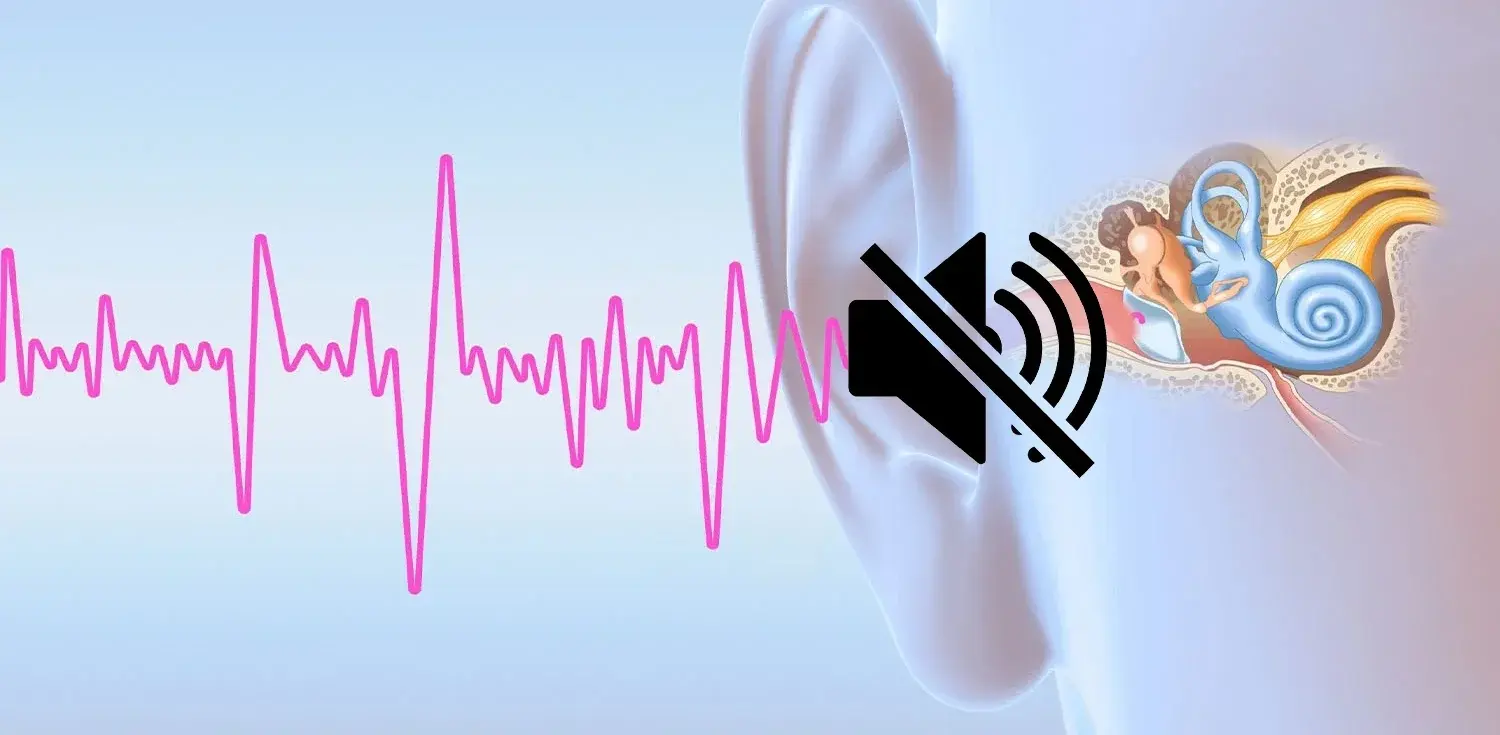
Hearing is complex, and not every difficulty has the same cause. Age, cumulative noise exposure, earwax, infection, medications and other factors can all influence how clearly sound is perceived.
That is why a responsible advertorial should not present a patch as a medical diagnosis or a guaranteed cure. Instead, Grunsify is better understood as a consumer wellness-support format designed around simplicity and routine.
Why Speech in a Noisy Room Can Be Hard Before Everyday Sounds Seem “Quiet”
Many adults first notice a problem in restaurants, family gatherings or other environments with competing sound. That experience is sometimes described as difficulty with speech-in-noise. A person may still hear that someone is talking, yet have trouble separating words from dishes clattering, music, traffic or multiple voices.
This is important because hearing is not only about detecting volume. The auditory system also has to distinguish frequencies, timing and speech cues, while the brain decides which sound deserves attention. When that system becomes less efficient, listening can feel exhausting even when a basic conversation in a quiet room still seems manageable.
Common everyday clues include missing parts of sentences, confusing similar consonants, needing captions more often, turning the television up, asking others to repeat themselves or finding phone conversations harder than face-to-face conversations.

The practical takeaway is that listening effort matters. If you repeatedly leave social situations mentally tired because you were concentrating intensely on speech, that is useful information to mention during a hearing evaluation.
Why the Behind-the-Ear Patch Format Is Different
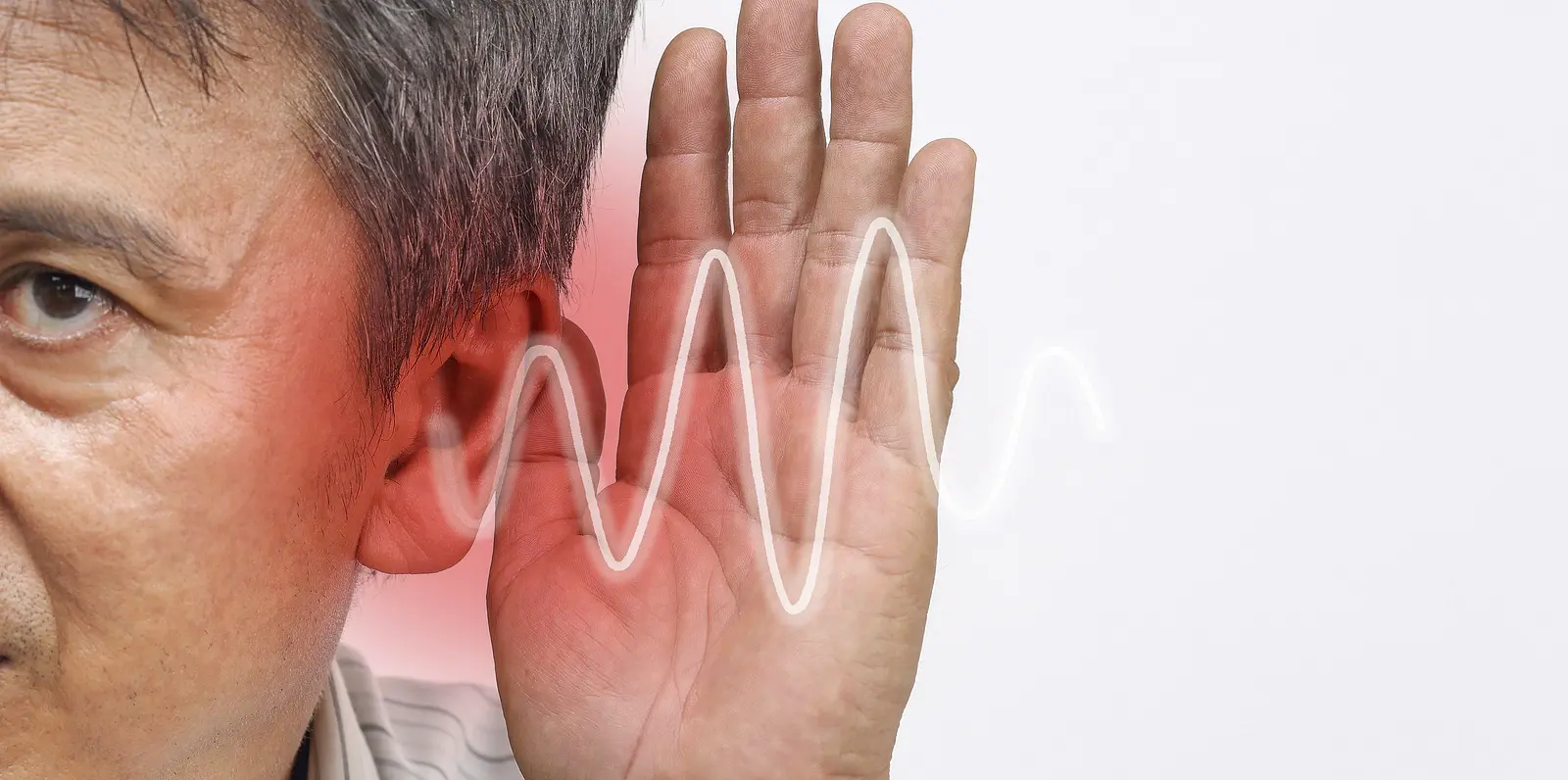
One of the biggest reasons consumers explore this type of product is convenience. The patch is external, compact and non-electronic, so it avoids many of the friction points associated with electronics or in-ear formats.
MICRONEEDLE PATCHESBehind-the-ear wellness formatgrunsify.com
Brand Presentation
The packaging shown in this article is represented with Grunsify branding rather than a third-party package. Lifestyle and hearing-health photos are used separately to keep the page educational instead of making every section look like an advertisement.
Tinnitus Is a Symptom, Not One Single Disease
Ringing, buzzing, hissing or other phantom sounds are commonly grouped under the term tinnitus. Tinnitus can occur with hearing loss, noise exposure, earwax, ear infection, medication effects and other conditions. Some people have tinnitus even when a standard hearing test does not show a large hearing threshold change.
That is why claims such as “one patch fixes tinnitus at the source” should be approached carefully. The underlying reason for tinnitus can differ from person to person. A consumer wellness routine may be easy to use, but convenience is not the same thing as a diagnosis.
Seek professional care if tinnitus begins suddenly, is strongly one-sided, pulses with your heartbeat, occurs with sudden hearing loss, or is accompanied by significant dizziness, neurological symptoms or severe ear pain.
Noise Exposure: One of the Most Important Modifiable Hearing Risks
Loud sound can injure hearing gradually or, at extreme levels, after a single event. Risk depends on both how loud the sound is and how long exposure continues. Work tools, concerts, motorsports, firearms and high-volume headphones are common examples.
A wellness product should never distract from the most proven part of noise-related hearing care: reducing harmful exposure. Turning volume down, increasing distance from a loud source, taking quiet breaks and using appropriate hearing protection can help reduce additional risk.

If you regularly work around loud sound or notice muffled hearing or ringing after noisy activities, hearing testing and a practical noise-protection plan are more important than relying on any patch, supplement or ear-care advertisement.
Introducing Grunsify™ Hearing Support Microneedle Patches
MICRONEEDLE PATCHESBehind-the-ear wellness formatgrunsify.com
Brand Presentation
The packaging shown in this article is represented with Grunsify branding rather than a third-party package. Lifestyle and hearing-health photos are used separately to keep the page educational instead of making every section look like an advertisement.
This version replaces external packaging images with original Grunsify-branded graphics.
Why Lifestyle Context Matters in Hearing Health
All packshots, bundle graphics and section visuals in this version are original branded illustrations using GRUNSIFY™ and grunsify.com, rather than third-party packaging or potentially infringing seller assets.
Cochlear Hair Cells: What They Actually Do
The supplied reference code centers several sections on “cochlear cells.” The medically useful concept is real, but the anatomy needs to be stated accurately. Inside the cochlea are specialized sensory hair cells that respond to movement created by sound. Their job is to help convert mechanical vibration into electrical signals that can be carried through the auditory nerve and interpreted by the brain.
Damage to these sensory structures can occur with aging, repeated noise exposure and some other conditions. In humans, significant sensorineural hair-cell damage is not something a consumer patch should be described as simply “regrowing” or “repairing” without direct clinical evidence for that specific product.
Earwax and Cochlear Hair Cells Are in Very Different Places
The source advertorial also links earwax directly to cochlear-cell damage. Anatomically, that explanation is misleading. Earwax is produced in the outer ear canal, while the cochlea sits much deeper in the inner ear, beyond the eardrum and middle ear. Normal earwax does not travel through the eardrum and coat cochlear hair cells.
Impacted earwax can still matter: if enough wax blocks the ear canal, sound may be reduced before it reaches the eardrum. That is a conductive problem and can cause muffled hearing. The appropriate response is safe assessment and removal when needed—not the assumption that wax has entered the cochlea.
Cotton Swabs: The Main Risk Is Mechanical Injury and Impaction
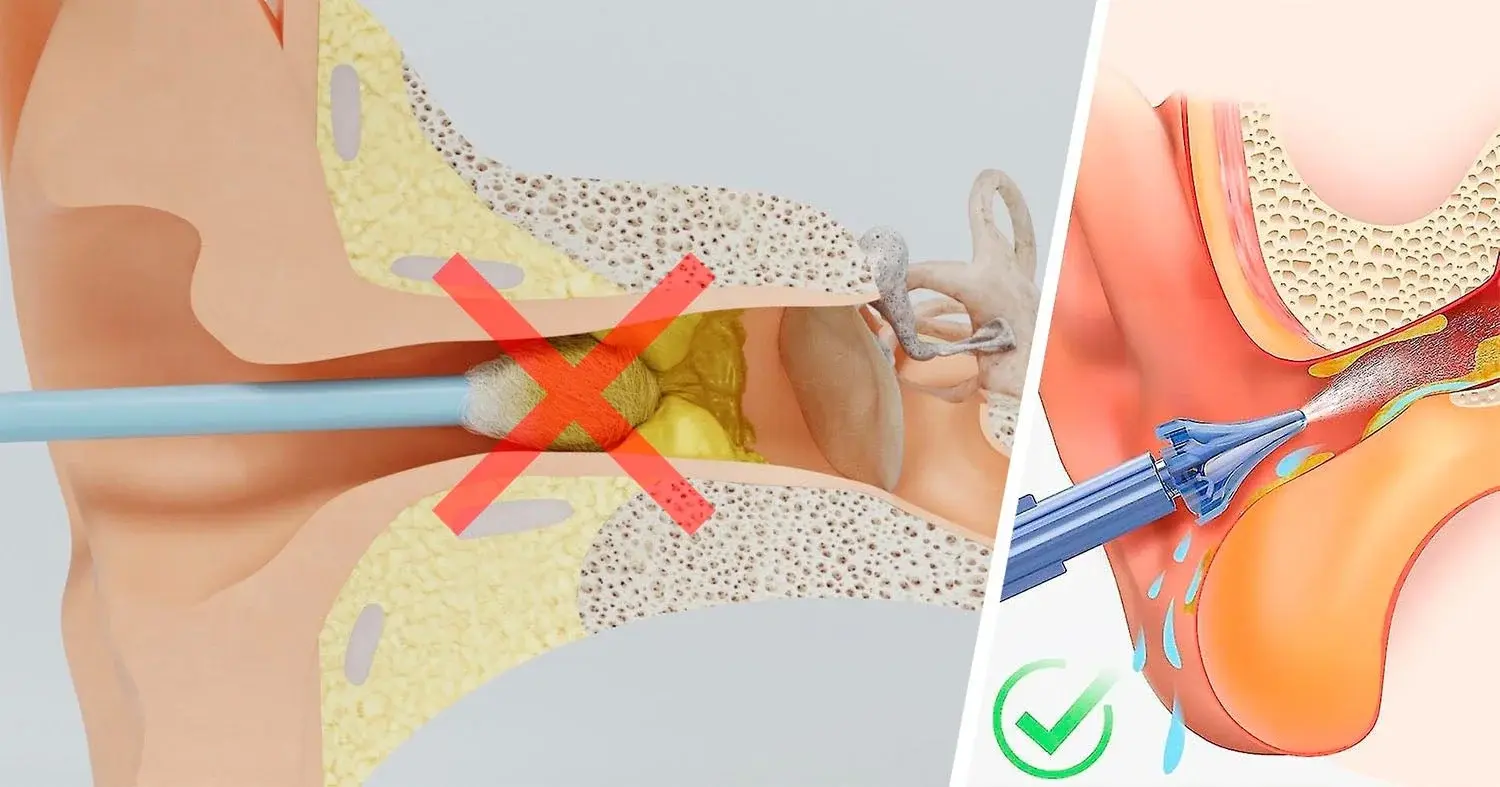
Cotton swabs are another topic raised in the supplied source. The more accurate concern is that inserting swabs deeply can push wax farther into the canal, irritate the skin or injure the eardrum. A swab in the ear canal does not physically reach the cochlea under normal anatomy.
The ear canal is usually self-cleaning. If you repeatedly feel blocked, have pain, drainage or suspect impacted wax, professional examination is safer than inserting objects deeper into the ear.
What “Microneedle” Means in a Consumer Patch
The term microneedle generally refers to very small projections arranged on a surface. In broader medical and research settings, microneedle technology has been studied as a way to interact with the outer skin barrier. But the word itself does not prove that a specific consumer patch has been clinically shown to improve hearing.
That distinction is important. Evidence for microneedle devices in one field cannot automatically be transferred to a different product, ingredient or health claim. In other words, “microneedle technology exists” and “this particular patch restores hearing” are two very different statements.
A compact external patch, a simple application routine, no batteries, no Bluetooth and no object placed inside the ear canal.
That behind-the-ear placement proves ingredients reach the cochlea, regenerate auditory hair cells or reverse sensorineural hearing loss.
Why Behind-the-Ear Placement Is Practical
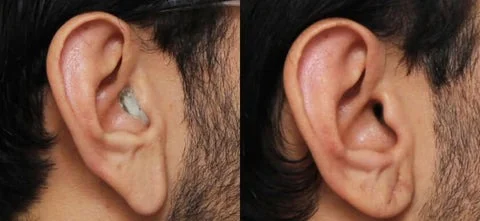
The area behind the ear is discreet, easy to reach and generally does not interfere with the ear canal. For users who wear glasses, the patch should be positioned so it does not rub against the frame. The skin should be clean, dry and intact before application.
Placement behind the ear is a practical design choice; it should not be described as proof of direct delivery to the inner ear. The inner ear is anatomically separated from the skin surface by multiple tissues and structures.
- Do not apply over cuts, rash, infection or irritated skin.
- Stop if significant redness, swelling, pain or itching develops.
- People with known adhesive sensitivity should be cautious.
- Follow the actual product directions for wear time and replacement frequency.
What Makes the Format Appealing
| Feature | Grunsify Patch Format | Typical Electronic Format |
|---|---|---|
| Battery needed | No | Often yes |
| Bluetooth / setup | No | Often yes |
| In-ear component | No | Often yes |
| Travel friendly | Very compact | Varies |
| Positioning | Behind-the-ear external use | Depends on device |
The main value proposition here is not complexity. It is the opposite: a more straightforward, low-friction format that fits more easily into a daily routine.
Want to Review the Product Itself?
Use the live product page to check the current bundle, pricing and checkout terms.
REVIEW CURRENT PRODUCT INFORMATIONDaily Listening Scenarios Are More Useful Than Repeating Product Packshots
For a hearing-wellness article, the most meaningful images are often ordinary situations where hearing matters. That is why this expanded version uses lifestyle material from the reference page rather than filling every section with a box of patches.
A quiet conversation may reveal whether speech sounds natural and whether you frequently need repetition.
Gradually increasing television volume can be a useful clue, especially when other people say the volume feels unusually high.
Multiple overlapping speakers place more demands on speech-in-noise processing and attention.
Phone audio removes visual speech cues such as lip movement and facial expression, so difficulty may be more obvious.


Current Bundle Structure
At the time of this build, the product page shows multiple purchase options so shoppers can start small or choose a larger quantity for repeat use.
What to Consider Before Choosing a Longer Supply
For a repeat-use wellness product, quantity should be considered practically. A smaller order may be easier for someone new to the format, while a longer supply may be more convenient for someone who already understands how the patch fits into their routine.
The live purchase page should be checked for the exact quantity, current price and checkout terms before ordering.
How a Professional Hearing Evaluation Is Different From an Online Product Quiz
A proper hearing evaluation can include an examination of the ear canal and eardrum, pure-tone testing across frequencies, speech testing and other measures depending on the situation. The goal is not simply to label someone as “good” or “bad” at hearing; it is to understand the pattern and severity of the problem.
For example, a blockage in the ear canal requires a very different response from age-related sensorineural hearing loss. Likewise, a sudden change in one ear is evaluated differently from a gradual, symmetrical decline over many years.

If a hearing aid or another clinical intervention is appropriate, a consumer wellness patch should not be used as a reason to delay it. The patch format may appeal to someone as an additional routine, but it occupies a different category from diagnostic and rehabilitative hearing care.
Medication, Earwax and Other Factors People Often Overlook
Not every hearing complaint starts in the inner ear. Earwax can block the canal in some people. Ear infections and middle-ear fluid can change sound conduction. Certain medications can be associated with tinnitus or hearing effects. Chronic health conditions and a history of noise exposure may also influence risk.
This is another reason a responsible hearing-health page should avoid a single “root cause” story. When the symptom has multiple possible explanations, the safest approach is to identify the cause rather than assume one mechanism applies to everyone.
How to Approach the Product Responsibly

A hearing-wellness patch should not replace evaluation of sudden, severe, one-sided or worsening hearing changes.
The page uses a professional editorial tone rather than pretending to be a hospital or doctor.
Practical Use Notes
Use only on clean, dry, intact skin. Do not place the patch inside the ear canal. If meaningful redness, itching or irritation develops, discontinue use and review whether the product is appropriate for you.
A Quick Tour of the Ear: Outer, Middle and Inner Ear
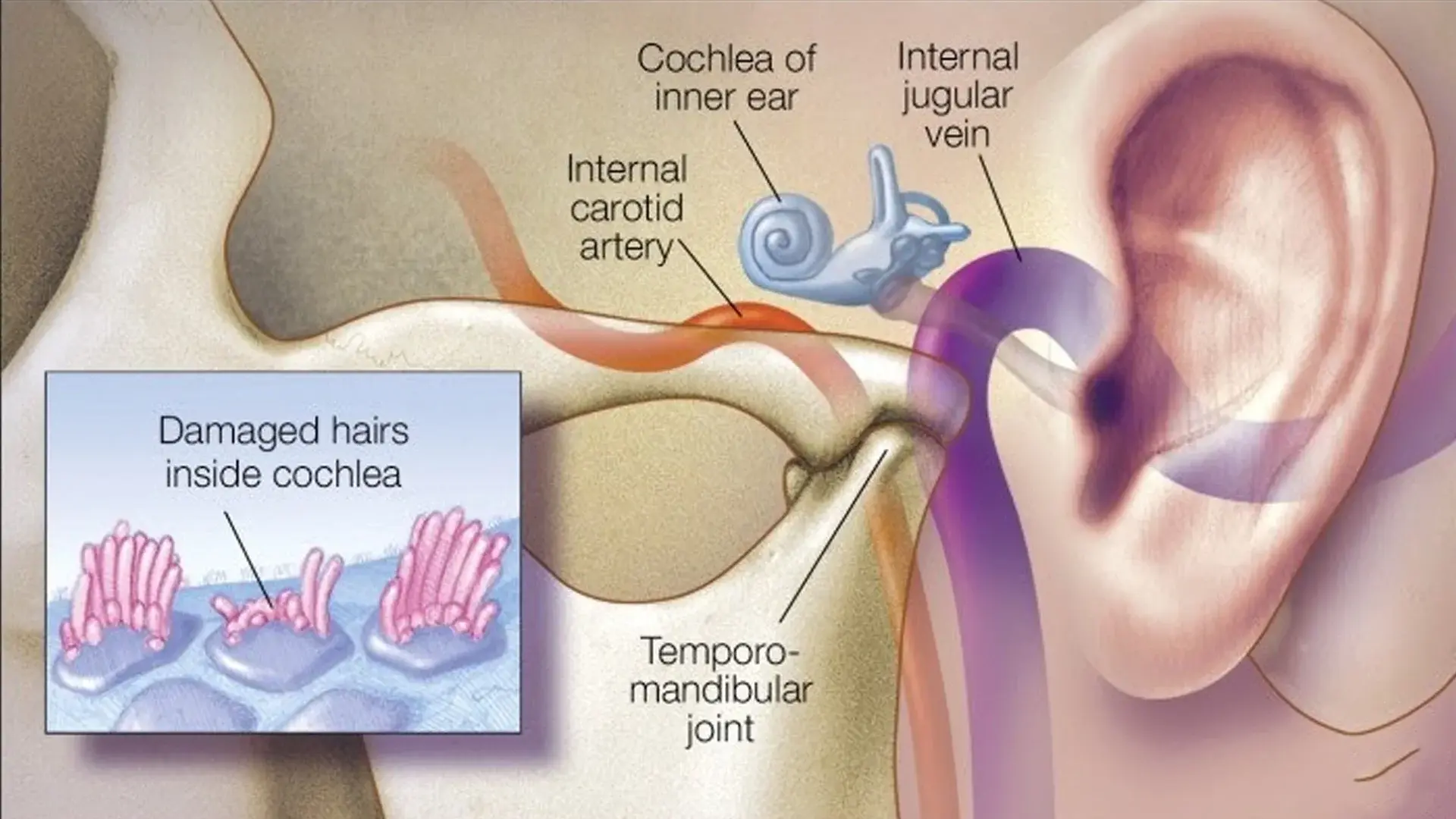
The hearing system is easier to understand when it is divided into three sections. The outer ear includes the visible ear and ear canal, which collect sound and direct it toward the eardrum. The middle ear contains the eardrum and tiny bones that transfer vibration. The inner ear contains the cochlea and sensory structures involved in converting vibration into neural information.
A problem in any one of these areas can produce a different pattern of hearing difficulty. That is why an ear canal blockage, a middle-ear problem and age-related inner-ear change should not be treated as if they were interchangeable.
For consumers, this anatomy lesson has a practical purpose: a patch placed on the skin behind the ear is still outside these deeper structures. Behind-the-ear placement may be discreet and convenient, but proximity alone does not demonstrate that a product reaches or repairs the cochlea.
What an Audiogram Can Tell You
A standard hearing test often measures the softest tones a person can detect at different frequencies. The results are plotted on an audiogram. Low frequencies correspond more closely to deeper sounds, while higher frequencies contribute to many of the fine details that make speech crisp and understandable.
Two people can both say “my hearing is not as good as it used to be” while having very different audiograms. One may have mostly high-frequency loss; another may have a flatter pattern across frequencies. That difference can influence which sounds are missed and which hearing strategies are most useful.
Hearing professionals may also evaluate speech understanding because detecting a beep in a quiet booth is not identical to following words in real-world conversation.
Hearing a Sound Is Not the Same as Understanding Speech
This distinction explains a common complaint: “I can hear people talking, but I cannot understand what they are saying.” Speech contains many short, high-frequency consonant cues. If those cues become difficult to detect, words can sound blurred even when the overall voice is loud enough.
The brain also uses context, memory and visual information. That is why some people do better face-to-face than on a phone, and why lip movement or facial expression can make a conversation easier to follow.
Simple communication strategies can reduce listening effort: face the person speaking, reduce background television or music when possible, improve lighting, move closer rather than shouting across a room, and ask for rephrasing rather than simply repeating the same sentence louder.

Age-Related Hearing Change Is Usually Gradual
Age-related hearing change often develops slowly enough that the person experiencing it may adapt without realizing how much has changed. Family members may notice first because television volume rises or repeated questions become more common.
Gradual change does not mean it should be ignored. Earlier recognition can make it easier to discuss hearing protection, communication strategies, formal testing and hearing technology before social withdrawal or listening fatigue becomes more disruptive.
A wellness patch may fit into someone’s personal routine, but it should not become a reason to postpone a hearing test when everyday communication is consistently affected.
Earwax: Helpful by Design, Troublesome When Impacted
Earwax is not simply “dirt.” It helps protect the ear canal, trap debris and maintain the local skin environment. Most ears move wax outward naturally. Problems arise when wax becomes impacted or blocks the canal.
Putting cotton swabs or other objects deep into the ear can push wax farther inward and may injure the ear canal or eardrum. If wax blockage is suspected, professional assessment is safer than aggressive self-cleaning.
This is another area where marketing can become misleading. A behind-the-ear patch does not mechanically remove a wax blockage from inside the ear canal. If muffled hearing is caused by significant impacted wax, the relevant solution is to address the blockage appropriately.
Five Questions to Ask Yourself Before Trying Any Hearing-Wellness Product
A gradual multi-year change is different from a sudden loss over hours or days.
Marked asymmetry can be clinically important and deserves evaluation.
Those symptoms shift the priority away from a wellness product and toward medical assessment.
Noise protection remains essential regardless of which consumer product you use.
Convenience and a simple routine are reasonable format expectations. Guaranteed medical restoration is a very different claim.
How to Judge Hearing-Wellness Claims Before You Buy
A useful way to evaluate an online hearing product is to separate format claims from medical outcome claims. Format claims describe things you can usually verify yourself: the patch is small, external, non-electronic and easy to carry. Medical outcome claims require a much higher level of evidence.
Patch size, number of patches per box, application location, whether batteries are needed, bundle quantities, shipping terms and return policy.
Claims to regenerate auditory hair cells, permanently reverse hearing loss, eliminate tinnitus, repair auditory nerves or produce a guaranteed improvement within a specific number of days.
Professional-sounding words such as “clinical-grade,” “doctor recommended,” “microcirculation” or “regeneration” should not substitute for transparent evidence. This page intentionally avoids presenting those words as proof of a medical outcome.
Who May Prefer a Patch-Based Wellness Routine?
The format may appeal to adults who want something simple and discreet, people who dislike placing products inside the ear canal, travelers who prefer a compact product, or users who do not want another electronic accessory to charge and maintain.
It may be less appropriate for someone seeking amplification, someone with medically significant hearing loss, or anyone who has been advised to use a hearing aid or other treatment. The fact that a patch is easy to use does not make it a substitute for those interventions.
Key Points From This Hearing-Wellness Review

Current Product Information
Review the live quantity options and checkout terms on the actual purchase page.
VIEW CURRENT PRODUCT PAGE
When You Should Not Wait and “See If a Patch Helps”
These warning signs matter because timing can be important for some ear and hearing conditions. A consumer product page should never create enough confidence to delay appropriate medical care.
A Better Long-Term Hearing-Wellness Routine
A practical hearing-wellness plan is broader than one product. It can include reducing avoidable noise exposure, using hearing protection in loud environments, reviewing medications with a clinician when appropriate, having persistent symptoms assessed, managing earwax safely and following through with recommended hearing rehabilitation.
A patch can be judged on whether its format is convenient and comfortable. The rest of hearing care still depends on protecting the auditory system and responding appropriately when symptoms change.
Common Questions